
 Listicle
Why Do Homes Sit on the Market So Long?
Last Updated: November 17, 2026
Quick Summary
Homes sit on market because of overpricing, weak photos or marketing, condition problems, and restricted showing access. Read your showing data first: high showings with no offers points to price or condition, while low showings points to exposure or access.
- Buyers screen listings by price band first, so an above-comp asking price shrinks your buyer pool.
- Compare your days on market against the local median for homes that sold in your price range.
- Requiring 24 or 48 hours of showing notice filters out buyers who are moving quickly.
- Change one major variable per checkpoint so you can tell which change moved the listing.
- A single well-supported price reduction reads more credibly than a series of small cuts.
Table of Contents
- Why Is My House Not Selling? Start With the Data
- Overpricing: The Most Common Reason Homes Sit on Market
- How Long Do Homes Stay on the Market? Reading the Benchmarks
- Condition, Curb Appeal, and the Buyer's First Impression
- Listing Photos, Marketing, and Why Exposure Falls Short
- Home Staging Tips for Sellers: Making the Home Show Well
- Showing Access, Seller Motivation, and Negotiation Signals
- How to Relaunch a Stale Listing With a Measurable Plan
- Frequently Asked Questions
Why Is My House Not Selling? Start With the Data
When a listing goes quiet, the fastest way to find out why is to read the data you already have: showing counts, days on market, price changes, and buyer feedback. That is the question behind most reasons homes sit on market for months, and the answer is rarely a mystery once you look at the numbers.
A common mistake is to assume the market is slow when the listing itself is the problem. Compare your showing volume against similar listings nearby. If showings are healthy but offers are not, the issue is usually price or condition. If showings are scarce, the issue is exposure or access.
- High showings, no offers: price or condition
- Low showings: photos, marketing, or showing access
- Long gaps between showings: pricing outside the comparable range
That pattern tells you where to spend your next dollar.
The showing pattern tells you which constraint to address first.
| Showing pattern | Likely cause |
|---|---|
| High showings, no offers | Price or condition |
| Low showings | Photos, marketing, or showing access |
| Long gaps between showings | Pricing outside the comparable range |
Overpricing: The Most Common Reason Homes Sit on Market
Pricing is the single strongest lever a seller controls. An asking price set above what comparable homes support shrinks your buyer pool before anyone walks through the door, and the market responds with silence rather than a counteroffer.
Buyers and their agents screen listings by price band first. A home priced slightly above its comparable sales simply does not appear in the searches where its likely buyer is looking. Weeks later, a price reduction puts it back in front of those buyers, but now with a stale listing history attached.
For sellers, the fix is disciplined: pull recent comparable sales, adjust for condition and upgrades, and price where the evidence points rather than where you hope it lands. If your home has custom features without direct comps, a deeper guide on pricing unique luxury homes walks through how to value what the market cannot easily match.
How Long Do Homes Stay on the Market? Reading the Benchmarks
There is no universal number, and that is the point. How long homes stay on the market depends on price band, location, season, and how competitive the immediate neighborhood is. A coastal property with a small buyer pool naturally moves slower than an entry-level home in a dense suburb.
The useful benchmark is local and recent: the median days on market for homes that sold in your price range and area over the past few months. Track that figure and compare your listing against it. If you are well past the local median with no offers, the market is telling you something specific.
Watch out: a low days-on-market figure can be misleading when it counts only homes that sold. Ask for the full picture, including expired and withdrawn listings, before you judge your own timeline.
Condition, Curb Appeal, and the Buyer's First Impression
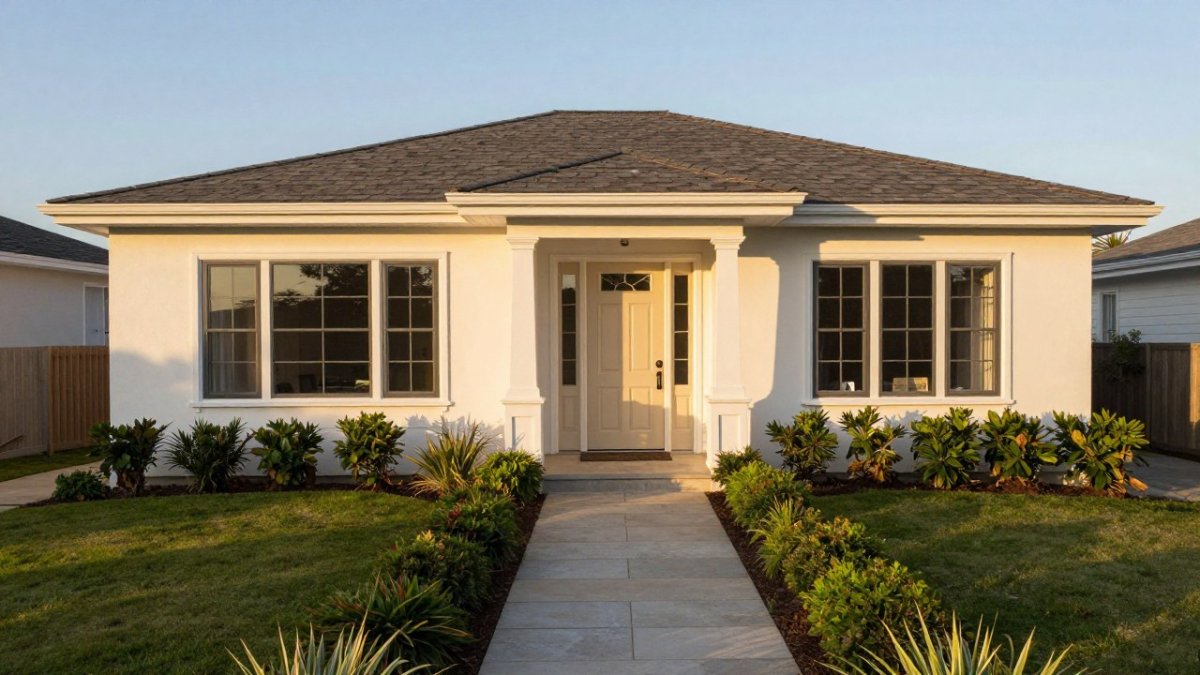
Buyers decide how they feel about a home in the first few seconds, often before they leave the car. Curb appeal, a sound roof, and visible maintenance set the tone for everything that follows. Small deferred repairs read as larger problems to a buyer walking through with an inspector's eye.
Walk your property as a buyer would. Note peeling paint, worn landscaping, a dated front door, and anything that signals neglect. Roof age and maintenance records matter too, because they shape both the offer and the buyer's inspection response. Condition problems do not just delay a sale; they invite renegotiation later.
Listing Photos, Marketing, and Why Exposure Falls Short
Weak photography is the quiet killer of good listings. If the photos are dim, cluttered, or shot on a phone, buyers scroll past without ever reading the description. Professional photos, a clear floor plan, and accurate room dimensions give a listing the online visibility it needs to earn showings.
Marketing reach matters just as much. A listing that appears only on the major portals and nowhere else reaches a fraction of the buyers who might want it. Targeted outreach to agents with active buyers in your price band often does more than another week of passive exposure. If your current marketing has not produced showings, a set of luxury real estate marketing strategies can help you see where the gaps are.
Home Staging Tips for Sellers: Making the Home Show Well
Staging is about removing reasons to say no. Declutter every room, depersonalize the walls, and let light do the work. A buyer should be able to picture their own life in the space, not yours.
Focus your effort where it pays:
- Clear counters and shelves in the kitchen and bathrooms
- Remove oversized furniture that makes rooms feel small
- Fix small flaws: scuffs, loose handles, burned-out bulbs
- Set the dining and living areas so the purpose of each room is obvious
For a full sequence, this step-by-step staging plan lays out what to do room by room before photos and showings.
Showing Access, Seller Motivation, and Negotiation Signals
Access problems are the easiest cause to fix and the easiest to overlook, because they never show up as a complaint. They show up as silence. If your listing earns views and saves online but produces few showing requests, the constraint is usually how hard you have made it to get inside.
Start by auditing your own showing rules against what buyers in your price band expect. The following barriers commonly reduce showing volume:
- Restricted windows. Limiting showings to a few hours on weekends removes every buyer who works those hours or is touring on a weekday.
- Long notice periods. Requiring 24 or 48 hours of notice filters out buyers who are moving quickly, and in a competitive price band those buyers simply move to the next listing.
- Occupied homes. Pets, tenants, and family schedules add friction. Renters in particular introduce lease terms, notice requirements, and coordination delays that can stretch a showing request into a multi-day negotiation.
- Lockbox and agent-only rules. If buyers cannot see the home without their own agent present, you lose the segment of buyers who tour on their own schedule.
- Unresponsive coordination. A showing service that does not confirm requests within a few hours reads to agents as a seller who will be difficult at the offer table.
Watch out: relaxing access rules without a plan for pets, valuables, and security can create a different problem. Set a clear protocol for each showing rather than simply opening the door.
Seller motivation is read through behavior, not statements. Buyers and their agents watch how quickly showing requests are confirmed, how promptly offer questions are answered, whether the seller counters or rejects outright, and whether requested repairs are negotiated or refused. A listing that has been on the market for months while rejecting reasonable offers teaches the market that the seller is not serious, and buyers respond by discounting their offers or walking away.
Use your showing data to separate access from price. If showing requests are low but online engagement is healthy, fix access first and re-measure within a defined window. If showing requests are healthy but feedback consistently cites the same issue, the constraint is condition or price, not access. If showings are strong and offers are absent, the market is telling you the price is above what the condition supports.
For sellers who want to sharpen the negotiation side before the first offer arrives, review how to negotiate luxury home offers so that flexibility on access translates into a stronger position at the table rather than a series of concessions.
How to Relaunch a Stale Listing With a Measurable Plan
A relaunch works only when it is sequenced and measured. The mistake sellers make is changing everything at once, which makes it impossible to tell which change moved the listing. Treat the relaunch as a short series of controlled adjustments, each with a checkpoint.
Step 1: Diagnose before you change anything. Pull your showing count, online views and saves, inquiry volume, buyer feedback, and days on market, and compare each against recent comparable sales in your price band and area.
Step 2: Fix the top constraint first. If exposure is the problem, new professional photos, a floor plan, and a targeted agent outreach push come before any price change. If access is the problem, revise showing rules and re-measure.
Step 3: Set checkpoints with dates. Define what success looks like before you make the change. A common pattern is to allow two to three weeks after a presentation or marketing change, then compare showing volume and inquiry volume against the pre-change baseline.
Step 4: Manage the listing history deliberately. Cumulative days on market, withdrawn and relisted status, and each price reduction are visible to buyers and their agents, and they shape how a listing is interpreted.
Step 5: Give the relaunch a clear story. Fresh photos, a revised price, and a short explanation of what changed give the listing a second first impression.
Watch out: a relaunch that changes the price and the photos at the same time leaves you unable to tell which one worked, and it can make the reduction look larger than the market evidence supports. Change one major variable per checkpoint where you can.
A structured approach to avoiding stale luxury home listings can keep the relaunch on track, and the same diagnostic discipline applies whether the listing is a week old or a season old. A home that sits is not a failed home.
If your listing has gone quiet, the cause is diagnosable and the fix is usually within reach. Reach out to Rhonda Scott for a candid review of your pricing, presentation, and marketing, and a plan built around your goals.
Frequently Asked Questions
Why do some homes sit on the market for a long time?
Most homes sit on market because of one of a few fixable issues: an asking price above what comparable sales support, condition problems buyers can see during a showing, weak listing photos and marketing reach, or showing access that is too restrictive. Days on market is a signal, not a verdict. A listing that gets showings but no offers usually points to price or condition, while a listing with almost no showings points to exposure, photos, or access.
How long is too long for a house to be on the market?
There is no universal number, but context matters more than a single figure. Compare your days on market to comparable homes in your price band and neighborhood, not to the whole metro. If similar homes are selling in weeks and yours has passed that window with no offers, the market is telling you something specific. A luxury property can take longer than the broader market, but the gap between your listing and its closest comps is the number to watch.
Should I lower the price if my house is not selling?
A price reduction works when the data shows the asking price is out of line with comparable sales. Before cutting, review showing activity, buyer feedback, and how your listing compares to active competition. A small reduction can reset buyer attention, but repeated small cuts often signal desperation and can hurt negotiation. A single, well-timed adjustment backed by comps usually lands better than a series of incremental drops.
Can poor photos make a home harder to sell?
Yes. Listing photos are the first showing, and most buyers decide whether to visit based on them. Dark, cluttered, or phone-quality images limit online visibility and reduce showing requests, which then looks like a demand problem when it is really a presentation problem. Professional photography, correct ordering with the strongest image first, and refreshed images after a relaunch all support stronger buyer feedback and more offers.