 how-to
Luxury Real Estate Marketing Strategies for 2026
Table of Contents
- Why Luxury Real Estate Marketing Demands a Different Approach
- Building a Luxury Home Marketing Plan That Works
- Luxury Home Pricing Strategy: Valuation Without Guessing
- Professional Luxury Real Estate Photography That Sells
- Virtual Tours for Luxury Homes: Engagement and Screening
- Privacy, Security, and Digital Safeguards During the Sale
- Off-Market Sales vs. Public Listing: Making the Right Trade-Off
- Frequently Asked Questions
Last Updated: October 19, 2026
Why Luxury Real Estate Marketing Demands a Different Approach
Selling a luxury home is not the same as selling any other property. The buyer pool is smaller. The stakes are higher. The expectations around privacy, discretion, and presentation are entirely different.
Most real estate marketing strategies focus on volume: list it, show it to everyone, hope someone buys it. That approach fails for luxury properties. A high-net-worth buyer doesn't want their purchase broadcast to the neighborhood. They want confidentiality.
At Rhonda Scott, we've spent over two decades managing luxury real estate transactions across Southern California. What we've learned is this: effective luxury real estate marketing strategies in 2026 start with a completely different mindset.
The difference shows up in every step. How you price the home. How you photograph it. Who you show it to first. Whether you list it publicly at all.
Building a Luxury Home Marketing Plan That Works
A luxury home marketing plan is not something you build in a day. It requires strategy, timing, and clear decision points before you list anything.
Start by asking yourself three questions: Who is your ideal buyer? How much privacy do you need? And what does success look like for you, speed, price, or discretion?
Your answers shape everything that follows. A tech executive selling a beachfront estate has different needs than a retired entertainment industry executive selling a custom compound. One might want maximum exposure to drive bidding. The other might want zero public exposure.
Step 1: Qualify Your Buyer Pool Before You List
The first step in any luxury real estate marketing strategy is knowing who you're selling to before you start marketing.
Don't just assume your buyer will find you. Identify them. Are they local? International? First-time luxury buyers or seasoned investors? Do they need financing or are they all-cash? Are they buying for primary residence, vacation property, or investment?
Once you understand your target buyer, you can reach them directly. This is where luxury marketing differs from standard approaches. You're not casting a wide net. You're identifying a narrow group of qualified prospects and approaching them strategically.
Common ways to identify qualified buyers include:
- Private networks and referrals: Reach out to attorneys, accountants, and advisors who work with high-net-worth clients
- Luxury buyer databases: Access networks of pre-qualified luxury purchasers
- International relocation firms: For out-of-state or international buyers relocating to Southern California
- Targeted outreach: Direct contact with known buyers in your market segment
- Off-market circulation: Share property details with a select group before any public listing
This upfront work saves time and protects privacy. You're not showing your home to tire-kickers or curious neighbors.
Step 2: Choose Between Public Listing and Off-Market Sale
This decision is critical. Do you list your luxury home publicly on the multiple listing service, or do you sell it off-market?
Each approach has trade-offs. A public listing reaches more potential buyers. It creates competition and can drive price. But it also means open houses, dozens of showings, and loss of privacy.
An off-market sale keeps your home confidential. Only qualified buyers see it. Showings are controlled.
The right choice depends on your situation. If your home is truly unique, a one-of-a-kind property with no comps, an off-market approach often works better. You're not competing on price; you're selling exclusivity.
Many luxury sellers use a hybrid approach: start off-market for 30-60 days, then move to public listing if you don't find the right buyer. This gives you privacy and discretion first, then expands reach if needed.
Step 3: Develop Your Confidentiality Controls
Privacy doesn't happen by accident. You have to build it into your process.
Start with a confidentiality agreement. Every potential buyer signs a non-disclosure agreement before viewing your home. This prevents details from leaking to neighbors, competitors, or the media.
Control who has access. Instead of open houses, schedule private showings by appointment only. Meet buyers at a neutral location first. Qualify them before they ever see the property.
Manage information carefully. Don't post your address online. Use a code name or lot number instead. Limit photos and details available publicly. If you do list publicly, use a placeholder address in the listing until the buyer is qualified.
Consider security measures during showings. If your home is vacant, have someone present during viewings. If it's occupied, remove valuables and personal documents from view. Luxury homes attract attention. Protect yourself.
A single careless showing can expose your privacy and security. One buyer who talks to the media or posts photos online can undermine your entire strategy. Vet every person who enters your home.
Luxury Home Pricing Strategy: Valuation Without Guessing
Pricing a luxury home is harder than pricing a standard property. There are fewer comps. Each home is unique. Standard valuation methods often fail.
The mistake many sellers make is guessing.
A real luxury home pricing strategy starts with a comparative market analysis. Look at recent sales of similar properties.
But comps only tell part of the story. A custom-built estate with no direct comps requires a different approach.
The best approach is to work with someone who knows your local market deeply. Rhonda Scott has analyzed hundreds of luxury transactions across Orange County and Los Angeles.
Pricing too high is the most common error. A luxury home priced above market sits for months.
Pricing strategically means pricing to sell within 60-90 days at the highest market value. It's not about maximizing your fantasy price.
Professional Luxury Real Estate Photography That Sells
Professional photography is not optional for luxury homes. It's essential.
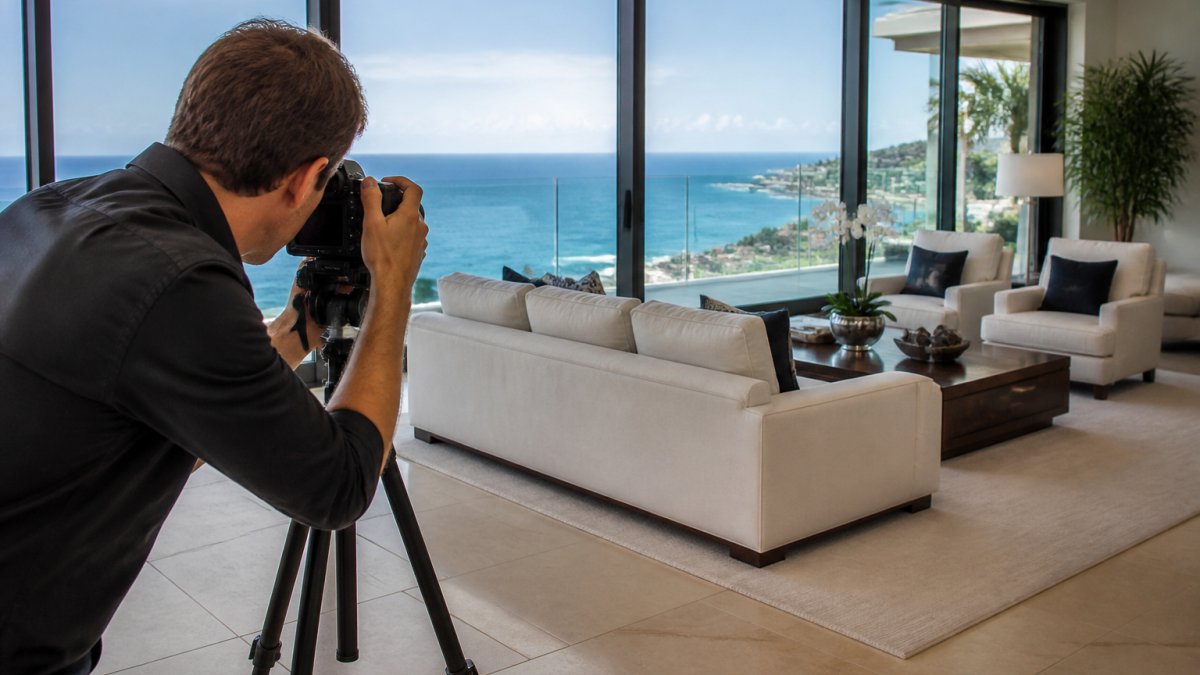
Standard real estate photos don't work. A luxury buyer expects to see your home at its absolute best. That means professional lighting, composition, and presentation. It means showing not just the home, but the lifestyle it offers.
Good luxury photography includes:
- Exterior shots: Showcase the property's curb appeal, landscape, and setting
- Interior lighting: Professional lighting that highlights architectural details and finishes
- Lifestyle shots: Show how the home is lived in, entertaining spaces, views, outdoor areas
- Detail shots: Capture high-end finishes, custom features, and unique elements
- Aerial photography: Drone shots showing the property's size, location, and surroundings
The goal is to tell a story. Not just "here's a big house." But "here's where you entertain clients on your terrace overlooking the coast" or "here's the private compound where your family gathers."
Many luxury sellers also invest in professional videography. A 2-3 minute video tour gives qualified buyers a complete sense of the property before scheduling a showing. It screens out unqualified prospects and saves you time on unnecessary viewings.
Virtual Tours for Luxury Homes: Engagement and Screening
Virtual tours serve two purposes for luxury properties: they engage qualified buyers, and they screen out everyone else.
A well-produced virtual tour lets serious buyers explore your home on their schedule. They can see the flow of rooms, the quality of finishes, and the views. If they're not interested, they don't waste your time requesting a showing.
Virtual tours for luxury homes should be:
- High-quality: Professional production with smooth transitions and clear audio
- Comprehensive: Show all major rooms and outdoor spaces
- Interactive: Let viewers pause, zoom, and explore at their own pace
- Detailed: Highlight special features, views, and amenities
- Matterport or similar: Use immersive 3D technology that feels like being there
A strong virtual tour is especially valuable for out-of-state or international buyers. They can get a real sense of the property before flying in for a showing. This saves everyone time and filters for genuine interest.
The key is making the tour feel exclusive. Don't post it publicly. Share it only with qualified buyers who've signed a confidentiality agreement. This maintains your privacy while giving serious prospects the information they need.
Privacy, Security, and Digital Safeguards During the Sale
Selling a luxury home means protecting more than just your privacy. You're also protecting your security and your personal information.
Start with physical security. If your home is vacant during the sale, have security systems active. Consider hiring a security service for open houses or group showings.
Protect your personal information. Remove family photos, documents, and anything that reveals your schedule or habits. Luxury homes are targets for theft and burglary.
Manage your digital presence. Don't post about your move on social media. Don't announce your sale in local publications if you want privacy. Control the narrative.
Work with your real estate agent to establish clear protocols. Who has keys? Who can show the property? What information can be shared? Document everything.
Consider the timing of your sale. If you're relocating, time your move so you're not advertising an empty home.
Off-Market Sales vs. Public Listing: Making the Right Trade-Off
The decision between off-market and public listing shapes your entire marketing strategy.
Off-market sales work best when:
- Your home is truly unique with few comps
- You need maximum privacy and discretion
- Your buyer pool is narrow and well-defined
- You're concerned about security or unwanted attention
- You want to avoid the disruption of constant showings
Public listings work best when:
- Your home fits a clear market category
- You want maximum buyer exposure
- You're willing to trade privacy for price competition
- Your home appeals to a broad buyer pool
- You want the credibility and reach of the multiple listing service
Most luxury sellers benefit from a phased approach. Start off-market for 30-60 days. If you find the right buyer, you're done. If not, move to a public listing to expand your reach.
This strategy gives you the best of both worlds: privacy and discretion first, then broader exposure if needed. It also signals to the market that your home is exclusive. By the time it goes public, it's already been carefully vetted.
The trade-off is time. Off-market sales take longer to find the right buyer. Public listings can move faster but with more disruption. Choose based on your priorities.
Selling a luxury home requires a different approach than standard real estate. It's not about volume marketing. It's about strategy, discretion, and reaching the right buyer.
Frequently Asked Questions
What makes luxury real estate marketing different from standard home marketing?
Luxury real estate marketing focuses on exclusivity, lifestyle appeal, and qualified buyer targeting rather than broad market exposure. Luxury buyers expect discretion, premium presentation through professional photography and videography, and access to off-market opportunities. The marketing emphasizes unique features, amenities, and the property's story rather than price alone. Privacy protection and confidential buyer screening are also critical components that standard marketing rarely addresses.
Should I sell my luxury home off-market or list it publicly?
Off-market sales offer privacy and controlled buyer access but reach a smaller pool. Public listings generate broader exposure and multiple offers, but sacrifice confidentiality. The choice depends on your priorities: if privacy is essential, off-market or pocket listings work well for properties in your agent's network. If you want maximum market exposure and competitive bidding, a public listing on the multiple listing service reaches more qualified buyers. Many luxury sellers use a hybrid approach, starting off-market and transitioning to public listing if needed.
How do you price a luxury home when there are no comparable sales?
Pricing luxury homes with unique features requires a comparative market analysis that adjusts for custom elements, location, views, and lifestyle amenities rather than relying on standard comps. Professional appraisers and luxury real estate agents analyze recent sales of similar-caliber properties, factor in market trends, and assess what buyers in your area are willing to pay for specific features. Working with an experienced luxury agent who knows the local market helps ensure your pricing reflects true market value without leaving money on the table or pricing the property out of reach.
Are virtual tours and professional photography worth the investment for a luxury home?
Yes. Professional photography and videography significantly impact buyer interest and perceived value in the luxury market. High-quality images and virtual tours allow qualified buyers to preview the property before scheduling a showing, reducing tire-kickers and protecting privacy. Aerial photography, 3D virtual tours, and professional staging highlight the property's best features and lifestyle appeal. These investments typically pay for themselves by attracting serious buyers, generating more offers, and often commanding a higher sale price than properties with amateur marketing materials.