
 How-to
Luxury Home Staging for Sellers: A Step-by-Step Plan
Last Updated: October 23, 2026
Quick Summary
Luxury home staging prepares a high-end property so buyers see its full potential before they set foot inside, and it is the one part of your sale you fully control. Budget two to three weeks for the pre-staging phase, then work room by room following the buyer's path through the house.
- Remove roughly a third of what is in every room, then take out family photos, collections, and awards.
- Luxury staging lives or dies on scale and proportion, so choose furniture that fits the room's actual footprint.
- Sellers typically face three budget tiers: consultation and light refresh, partial staging, and full staging.
- Ask for an itemized proposal, because a lump-sum figure hides removal fees and monthly rental renewals.
- Compare the staging spend with your monthly carrying costs rather than with the list price.
Table of Contents
- Why Luxury Home Staging Decides the Sale
- How to Prepare a Luxury Home for Sale: The Pre-Staging Phase
- Your Home Staging Checklist for Sellers, Room by Room
- What Luxury Home Staging Costs and How to Budget
- Luxury Home Staging Before and After: What Actually Changes
- Staging an Occupied Luxury Home Without Disrupting Your Life
- Measuring Results and Adjusting Before You Drop the Price
- Conclusion
- Frequently Asked Questions
Why Luxury Home Staging Decides the Sale
Luxury home staging for sellers is the practice of preparing a high-end property for the market so buyers see its full potential before they ever set foot inside.
The stakes are higher than in the general market. A luxury listing competes against a small pool of similar properties, and buyers tour several in one afternoon. The home that photographs better and shows cleaner wins the second visit.
How to Prepare a Luxury Home for Sale: The Pre-Staging Phase
Preparation comes before furniture. Walk the property with your agent and note every repair, dated finish, and crowded surface. Luxury buyers hire inspectors who find what you miss, so fix the obvious items first: water stains, sticking doors, tired caulk, and burned-out fixtures.
Budget two to three weeks for this phase. It is unglamorous work, and it is where most sellers lose momentum.
Declutter, Depersonalize, and Repair
Remove roughly a third of what is in every room, then remove family photos, collections, and personal awards. Buyers need blank space to imagine their own life there. A common mistake is leaving just enough personal items to feel "homey." In luxury, that reads as clutter.
Your Home Staging Checklist for Sellers, Room by Room
The best home staging checklist for sellers works room by room and follows the buyer's path through the house. Start at the entry, move through the main living spaces, then finish with bedrooms and outdoor areas. Each room gets one clear focal point and nothing competing with it.
- Entry: fresh paint, a console, one large mirror, no shoe piles
- Living room: furniture pulled off the walls, one conversation grouping
- Kitchen: clear counters except one styled bowl or board
Furniture Selection, Scale, and Layout
Luxury staging lives or dies on scale and proportion. Oversized pieces make rooms feel small; undersized pieces make them feel cheap. Choose furniture that fits the architecture and the room's actual footprint, then arrange it to show flow. Buyers should walk a clear path without turning sideways.
Lighting, Artwork, and Finishes
Lighting changes how a room photographs and how it feels at a showing. Replace cool bulbs with warm ones, add lamps to dark corners, and open every blind. Artwork should be large, abstract, and neutral. Finishes matter too: swap dated hardware and faucets rather than renovating.
What Luxury Home Staging Costs and How to Budget
Luxury home staging cost varies widely by scope, square footage, and whether the home is occupied or vacant. Sellers typically face three budget tiers: a consultation and light refresh, partial staging of key rooms, and full staging with rental furniture throughout. What separates a useful budget from a guess is knowing which line items drive the number and how to measure whether the spend pays for itself.
The Three Budget Tiers, Itemized
Tier 1, Consultation and light refresh. A walkthrough with a written room-by-room plan, plus accessory and soft-goods swaps you execute yourself.
Tier 2, Partial staging of key rooms. The stager supplies and installs furniture, art, lighting, and accessories in the rooms that carry the listing photos: entry, main living space, kitchen, primary suite, and one outdoor area.
Tier 3, Full staging throughout. Rental furniture, art, rugs, lighting, bedding, and accessories in every photographable room, plus installation and removal.
What the Proposal Should Itemize
Ask for a written proposal that breaks out each of these, because a single lump-sum figure hides the costs that appear later:
- Design and consultation fee
- Furniture rental, priced per piece or per room, per month
- Art, rug, lighting, and accessory rental
Budgeting Against Holding Costs
The number that matters is not the staging invoice by itself; it is the staging invoice compared with what every extra month on market costs you. Add up your monthly carrying costs, mortgage or bridge financing, property taxes, insurance, utilities, HOA dues, landscaping and pool service, and security, and treat that as the true cost of a slow sale.
A Simple Return-on-Investment Framework
You will not find a reliable published percentage for luxury staging ROI, and any stager who quotes one is guessing. Instead, measure value three ways:
- Against your carrying costs. Divide the staging total by your monthly holding cost. If staging equals two months of carrying costs and the presentation shortens the listing by more than that, the math works.
- Against the price reduction you are trying to avoid. A price cut is permanent and compounds through every future negotiation. Compare the staging spend with the smallest reduction you would consider, not with the list price.
- Against showing quality. Track tours and second visits before and after staging. If the same price point produces more second showings once the home is staged, the presentation is doing its job and the next lever is marketing, not price.
Luxury Home Staging Before and After: What Actually Changes
The luxury home staging before and after comparison rarely shows a dramatic remodel. It shows the same room, quieter and better lit. Walls lose family portraits and gain neutral art. Furniture shrinks to fit the room.
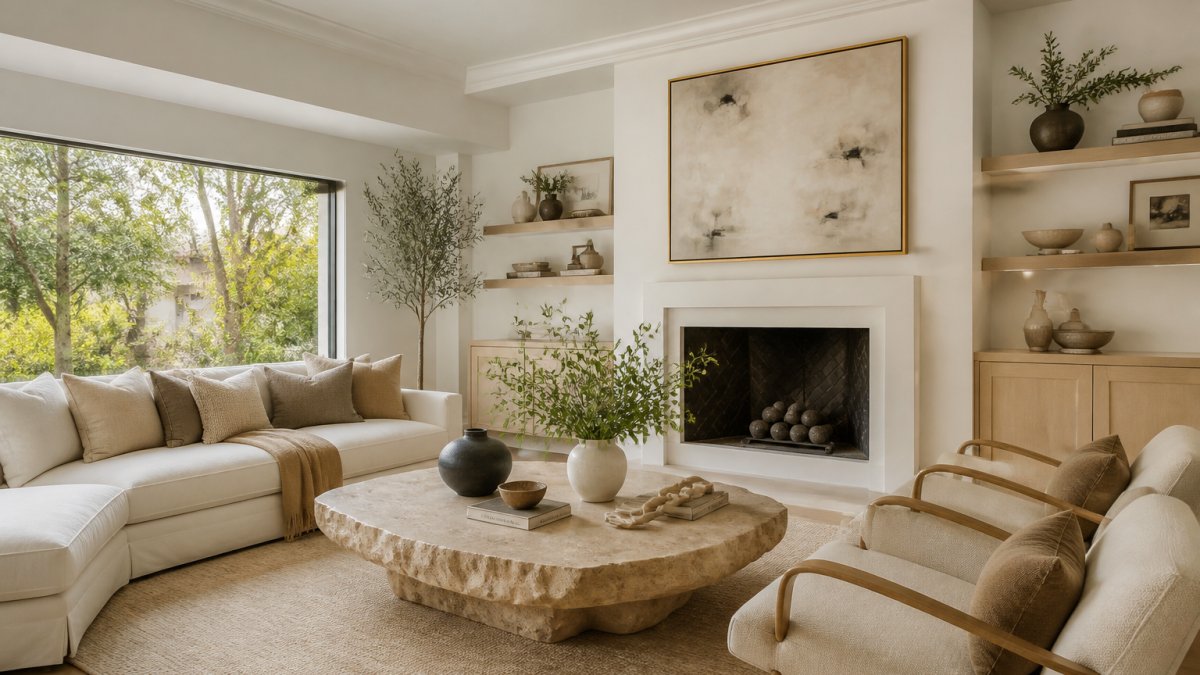
What changes most is how the room photographs. Listing photos carry the first impression, and most buyers decide whether to tour from those images alone.
Staging an Occupied Luxury Home Without Disrupting Your Life
Occupied staging is the norm in luxury, and it can be done without turning your household upside down. The workable approach is phased: declutter first, then bring in accessories and a few rented pieces, then restyle room by room over several days. What most guides skip is the calendar, the privacy plan, and the daily routine that make an occupied staging survive a multi-week listing.
A Realistic Phased Calendar
Plan the work in four passes so no single day upends the household:
- Week 1, Edit and repair. Declutter, depersonalize, and complete the punch list from your pre-staging walkthrough. This is the noisiest, most disruptive phase; schedule it before any photography and, if possible, while you are traveling.
- Week 2, Paint, hardware, and lighting. Swap dated hardware and faucets, replace cool bulbs with warm ones, and touch up paint. These are small jobs with outsized photo impact and can be done room by room.
- Week 3, Install. The stager delivers rented furniture, art, rugs, and accessories. Concentrate the install in the photographable rooms first so the home is camera-ready even if secondary rooms wait.
- Week 4, Style, photograph, and reset. Final styling, professional photography, and a written reset guide for each room. Build in a buffer before the first showing.
Protecting Privacy and Security
A staged luxury home is a public-facing product, and your personal information should not be part of it. Before the first photographer arrives:
- Remove documents, mail, medications, financial statements, and anything with your name, address, or account numbers visible.
- Take down family photos, diplomas, awards, and collections, both for depersonalization and for privacy.
- Lock or remove firearms, jewelry, and small valuables; do not rely on a drawer.
- Disable smart-home displays that show calendars, messages, or camera feeds, and confirm with your agent how alarm codes and lockbox access are handled during showings.
Living in a Staged Home
The first two weeks after photography are the adjustment period. A few routines make it sustainable:
- Keep a small bin in each staged room for daily items, chargers, remotes, paperwork, so surfaces can be cleared in minutes.
- Eat in the kitchen or a designated area, not in the staged living and dining rooms, and reset those rooms after each use.
- Keep the primary suite hotel-ready: bedding smoothed, nightstands empty, towels fresh. This is the room buyers remember.
- Photograph each room after staging so you can reset it quickly before a showing. A ten-minute reset is far easier than restyling from scratch.
When Occupied Staging Is the Wrong Choice
If the household includes young children, pets, or a home office that cannot be packed down, a partial staging of the photographable rooms is usually better than a full install. The goal is a consistent, camera-ready presentation in the rooms that sell the home, not a museum the family cannot live in for eight weeks.
Measuring Results and Adjusting Before You Drop the Price
Staging results show up in showing requests, not in compliments. Track how many buyers tour the home in the first two weeks, how long they stay, and what they mention afterward.
Before cutting the price, fix the presentation first. Re-shoot photos in better light, restyle the weakest room, and refresh curb appeal. A price reduction is permanent; a staging adjustment is not.
Conclusion
Selling a luxury home means competing for a small pool of discerning buyers, and presentation is where you can still gain ground. Rhonda Scott brings 24+ years of experience, $578M+ in transactions, and a seller-focused approach built around strategic pricing, compelling property presentation, and targeted marketing. If you are preparing a high-end property for the market, submit a message and we will build a plan around your goals.
Frequently Asked Questions
How much do stagers charge to stage a house?
Luxury home staging cost varies by square footage, whether the home is vacant or occupied, and how much rental furniture and art is required. Most stagers quote a design fee plus monthly rental for furniture and accessories, and some charge a flat fee for consultations only. Because rates shift with inventory and timeline, ask for an itemized quote rather than a single number, and confirm what happens to the rental rate if the home sits longer than expected.
Does staging really help sell a house?
Staging does not change the square footage or the location, so it cannot fix a pricing problem. What it does is remove the friction that makes buyers hesitate: awkward layouts, empty rooms that read as small, and personal decor that distracts from the architecture. In luxury homes, where buyers compare several similar properties, presentation is often the only visible difference between listings. Track showings and feedback after staging to see whether it is doing its job.
Who usually pays for staging a home for sale?
The seller typically pays for staging, either directly or through an agreed credit at closing. Some agents front the cost and recover it from the sale proceeds, which is worth asking about up front. Get the arrangement in writing before staging begins, including who owns the rented furniture and who covers any damage. If your listing agreement does not mention staging, raise it before you sign.
Which rooms should sellers prioritize when staging a high-end home?
Start with the rooms buyers photograph and remember: the entry, the main living area, the primary suite, and the kitchen. Those four spaces carry most of the first impression and most of the listing photos. Secondary bedrooms, home offices, and outdoor living areas come next if budget allows. A home staging checklist for sellers should rank rooms by visibility, not by square footage, so the money lands where buyers actually look.