 how-to
Selling Luxury Property With Privacy: A Strategic Guide
Table of Contents
- Why Privacy Matters When Selling Luxury Property
- Selling a House Off Market: The Private Sale Approach
- Luxury Real Estate Marketing That Protects Privacy
- Managing Discreet Home Showings and Access Control
- Off-Market Luxury Homes: Building a Private Network
- Protecting Personal Information and Valuables
- Pricing Your Luxury Property Confidentially
- Working With an Agent Who Understands Discretion
- Frequently Asked Questions
Last Updated: October 18, 2026
Why Privacy Matters When Selling Luxury Property
Privacy is a strategic necessity when selling a high-value home.
Selling luxury property with privacy means controlling who knows about the sale, when they know it, and how much they see.
At Rhonda Scott, we know selling a luxury home affects your safety, your family's routine, and your financial outcome, so we prioritize your privacy from first conversation through closing.
The stakes are higher with luxury properties. A $2M home draws attention a $500K property never would: vacant homes become targets, repeated showings mean repeated access, and your family's habits become visible to strangers.
Selling a House Off Market: The Private Sale Approach
How Off-Market Sales Work
An off-market sale is a private transaction that never appears on public listing services. Instead of marketing to the general public, you work with a real estate professional who reaches out directly to a curated network of qualified buyers. The property stays off the MLS: no public photos, no open houses, no yard sign.
This works because luxury buyers search differently: high-net-worth individuals hear about opportunities through agents, advisors, and networks, not public listings.
The process looks like this:
- Your agent identifies qualified buyers in their network
- Direct outreach happens by phone or email
- Showings are scheduled one-to-one with pre-screened buyers
- Negotiations happen confidentially
- Closing proceeds without public record until it's final
Off-market luxury homes sell because the right buyer hears about them first, with no competition from other listings and no pressure from market timing. That buyer is often motivated, pre-qualified, and serious.
Trade-Offs: Private Sales vs. Public Listings
Private sales reduce exposure but limit your buyer pool, meaning fewer offers and potentially less competitive bidding. The buyers you do reach are often more serious: recommended directly, pre-qualified, and faster to move.
Public listings maximize exposure, and that competition can drive prices up. However, your home becomes visible to everyone: security concerns increase, showings become frequent, and your family's routine is disrupted.
Many luxury sellers choose a hybrid approach: start off-market with a private network for 30 to 60 days, then move to a public listing if you don't get the right offer.
The right choice depends on your timeline, comfort with exposure, and market. A waterfront estate in a hot market might sell quickly off-market; a unique property might need broader exposure.
Luxury Real Estate Marketing That Protects Privacy
Targeted Outreach to Qualified Buyers
Reaching the right buyer without broadcasting your sale is the core of private marketing. This requires strategy, not just a contact list.
Qualified buyers have the financial capacity to purchase, are actively looking or considering a move, and fit the profile of someone who would want your home.
Your agent should have a network built over years. That network includes:
- Previous clients who bought or sold luxury properties
- Other agents who represent high-net-worth individuals
- Attorneys and accountants who advise wealthy clients
- Mortgage brokers who work with luxury buyers
- International relocation specialists
- Corporate executives and business owners in your area
Direct outreach happens through personalized emails, calls, and meetings. "I have a client with a property that matches what you've been looking for" beats a mass email blast.
The goal is discreet marketing that feels like insider information, not a sales pitch. Qualified buyers trust agents they know and move quickly when they hear about something before the public does.
Professional Presentation Without Overexposure
Your home still needs to look its best in a private sale, but "best" doesn't mean the same thing for every buyer.
Professional photography and videography matter, but they don't need to be everywhere. For a private sale, your agent might create a portfolio of high-quality images shared only with pre-qualified buyers under confidentiality agreements, never posted publicly.
A property tour video serves the same purpose, showing the home's features, flow, and character without broadcasting the sale, shared selectively rather than uploaded to YouTube or Zillow.
Professional presentation in a private context means:
- High-quality photography for qualified buyers only
- Video tours sent under confidentiality agreements
- Detailed property descriptions highlighting unique features
- Floor plans and site plans for serious inquiries
- Aerial photography (if it doesn't reveal sensitive property details)
The difference is control: you decide who sees what and when, protecting your privacy while still showing the home's true value to the right people.
Managing Discreet Home Showings and Access Control
Screening and Qualifying Buyers Before Access
Not every interested party should get inside your home. Screening happens before anyone steps through your door.
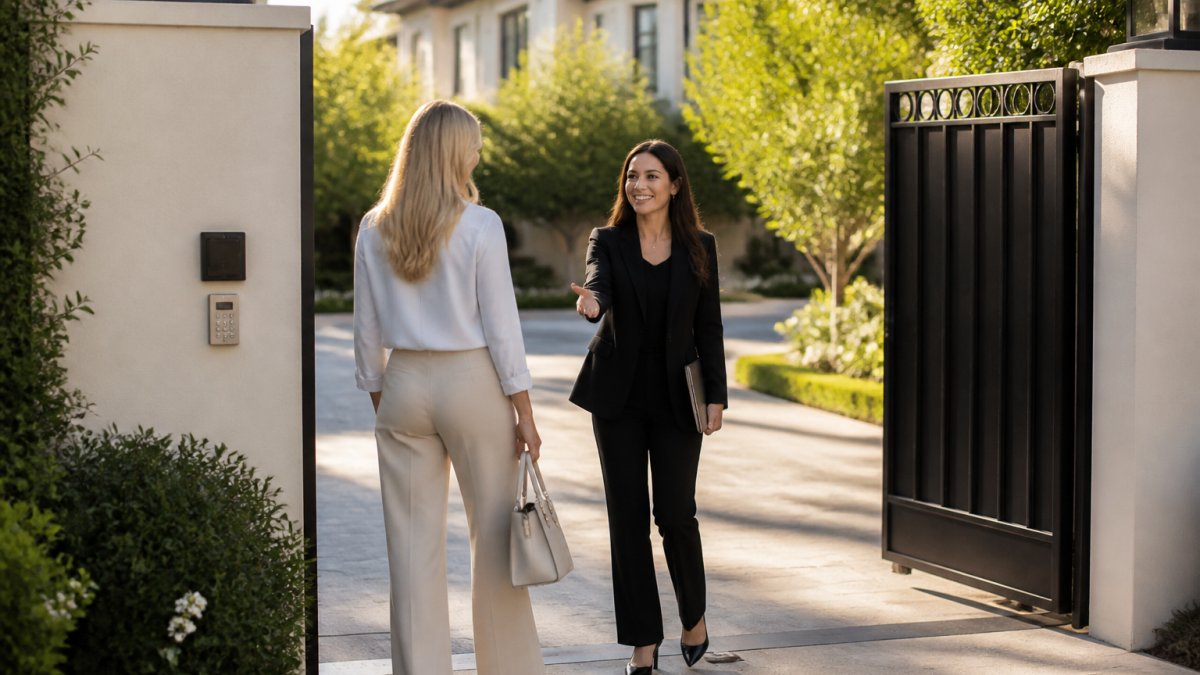
Buyer qualification means verifying financial capacity, genuine interest, and legitimate intent.
Tire-kickers, curious neighbors, quick-flip investors, and agents scouting the competition don't meet these standards. Your agent should screen them out before they become your problem.
A confidentiality agreement is standard for luxury sales: it requires the buyer to keep the sale private and signals you're serious, since only motivated buyers will sign. Casual inquiries usually end there.
The screening process should include:
- Verification of pre-approval or proof of funds
- Confirmation of agent representation
- A brief conversation about the buyer's needs and timeline
- Signature on a confidentiality agreement
- A single showing appointment scheduled in advance
This takes time upfront but saves far more later by preventing unwanted access and protecting your privacy.
Security Protocols During Showings
Access control during showings protects your home and your family. A few simple protocols make a big difference.
Scheduled showings mean no surprise visitors. Your agent coordinates all access, so you know when buyers are coming and can secure valuables, documents, and personal items beforehand.
During the showing itself, a few practices protect your interests:
- Your agent or a lockbox controls entry, not the buyer
- Showings happen during daylight hours when possible
- Your agent stays with the buyer throughout the tour
- No photos or videos by the buyer (unless pre-approved)
- A sign-in log tracks who visited and when
- The home is secured immediately after each showing
If you're home during showings, stay in a separate area so buyers can explore and talk freely and your family's routine stays private.
For vacant homes, consider a temporary security system: motion sensors and cameras discourage theft and create a record if anything goes missing. Some sellers use a lockbox that logs entry times; others hire a security service to monitor the property.
Off-Market Luxury Homes: Building a Private Network
Your agent's network is the foundation of an off-market sale. This network doesn't appear on any website. It's built through years of relationships, transactions, and trust.
A strong network for off-market luxury homes includes agents who specialize in luxury properties, not just any agent with a listing. They have clients actively looking for high-end homes, understand luxury transactions, maintain confidentiality, and have the credibility to bring serious buyers to the table.
Building this network takes time. Your agent should tell you specifically who they'll contact, why those people might be interested, and their track record with similar properties. Vague answers like "I'll send it to my network" are not enough.
When your agent reaches out, the message should be personal and specific. "I have a client with a waterfront estate in a gated community.
The best off-market sales happen when the buyer hears about the home from someone they trust, built over time through successful transactions and professional relationships. Without that network, an off-market strategy won't work as well.
| Strategy | Best For | Timeline | Buyer Pool | Privacy Level |
|---|---|---|---|---|
| Off-market private sale | Unique homes, privacy priority | 30-90 days | Smaller, curated | Highest |
| Hybrid approach | Most luxury homes | 60+ days | Medium, expanding | High to medium |
| Public listing | Market exposure needed | 60-180 days | Largest | Lower |
Protecting Personal Information and Valuables
Digital Privacy and Location Safeguards
Your home's address and details are sensitive information. Once they're public, you can't take them back. Digital privacy starts before anyone visits.
When selling luxury property with privacy, control what information appears online. Your agent should not post your address publicly until you're ready.
For private sales, this is easier to control: images are shared directly with qualified buyers, not posted to Zillow or Instagram. Even so, be cautious about property-description details.
Your home's location data is also worth protecting.
Consider using a lockbox or keypad entry instead of handing out physical keys. This creates a record of who accessed the home and when. It also prevents keys from being copied or distributed to unauthorized people.
Physical Security During the Sale Process
A home for sale is temporarily more vulnerable. You're inviting strangers inside. The home may be vacant for showings. Valuables and personal documents are visible.
Securing valuables means storing high-value items off-site or in a safe during the sale.
Personal documents, financial records, medical information, and family photos should be removed from sight.
Install temporary security cameras in common areas. Not hidden cameras, visible ones that deter theft and create a record if something does go missing.
For vacant homes, consider a temporary alarm system or security service. Motion sensors can alert you to unauthorized entry. A security company can do periodic checks.
Ask your agent to brief each buyer on what's off-limits. Certain rooms may not be shown. Personal spaces should be respected.
Pricing Your Luxury Property Confidentially
Pricing a luxury home is harder than pricing a standard property: comparable sales are scarce, each home is unique, and market conditions change.
Selling luxury property with privacy means pricing without broadcasting your situation. Don't mention your asking price to neighbors or casual acquaintances. Don't post it on social media.
Your agent should conduct a confidential market analysis, different from a public appraisal.
This analysis should be based on real data: actual sales prices (not list prices), days on market, and buyer profiles. Your agent should explain their reasoning; if they can't, ask for more detail.
The goal is to price competitively without undervaluing your home.
Working With an Agent Who Understands Discretion
Not every real estate agent is equipped to handle a private luxury sale: the skills, network, and approach are different.
An agent who understands discreet marketing has specific experience with luxury properties and off-market sales.
When interviewing agents, ask directly about their off-market experience: how many sales, how long they took, and price relative to asking.
At Rhonda Scott, we understand the unique challenges of selling luxury properties where privacy is a priority.
The relationship with your agent matters more in a private sale than in a public listing.
Selling a luxury home privately requires strategy, discipline, and the right professional support.
Frequently Asked Questions
Can I sell a luxury property without listing it on the MLS?
Yes. Off-market sales allow you to sell luxury property with privacy by marketing directly to qualified buyers through your agent's private network, professional contacts, and targeted outreach. This approach limits exposure but can attract serious, pre-qualified purchasers. The trade-off is reduced market visibility compared to MLS listings, which may affect the pool of potential buyers and potentially the final sale price. Your agent can advise whether an off-market approach or a hybrid strategy best fits your goals.
How do I protect my privacy during luxury home showings?
Implement buyer screening before showings by requiring proof of funds, mortgage pre-approval, or references. Use discreet home showings with limited access, schedule appointments at specific times rather than holding open houses. Remove personal documents, photos, and valuables before each showing. Work with your agent to maintain confidentiality agreements and track who enters your home. Digital privacy matters too: limit online property details, use password-protected virtual tours, and avoid social media posts about the sale.
Does selling a luxury home privately affect its sale price?
Off-market sales can affect pricing in both directions. A private sale may attract motivated, qualified buyers willing to pay full or above-market value because competition is limited and the property feels exclusive. However, reduced exposure means fewer potential buyers, which could result in a lower final price if the right purchaser isn't found. Comparative market analysis and strategic pricing from an experienced agent help ensure you receive fair value regardless of the sales method you choose.
What should I look for in an agent to sell a luxury home discreetly?
Choose an agent with proven experience selling luxury property with privacy, a track record of off-market transactions, and a strong private buyer network. Verify their understanding of confidentiality protocols, security procedures, and buyer qualification. Ask how they handle digital privacy and property exposure. Look for someone who listens to your specific concerns, communicates clearly about trade-offs between private and public marketing, and demonstrates discretion in all client interactions. Personal referrals and a consultation focused on your goals are valuable.