 ultimate-guide
Orange County Luxury Home Market: 2026 Guide
Table of Contents
- Orange County Luxury Home Market: What Buyers and Sellers Need to Know
- Coastal Orange County Luxury Real Estate Trends
- Luxury Home Buying Process in Orange County: A Step-by-Step Framework
- Luxury Property Staging Tips That Move Million-Dollar Listings
- Neighborhood Comparisons: Lifestyle Trade-Offs Across Orange County
- Ownership Costs and Due Diligence for Orange County Luxury Properties
- Market Outlook: Historical Trends and What's Ahead for the Orange County Luxury Home Market
- Conclusion: Making Informed Decisions in the Orange County Luxury Market
- Frequently Asked Questions
Last Updated: October 5, 2026
Orange County Luxury Home Market: What Buyers and Sellers Need to Know
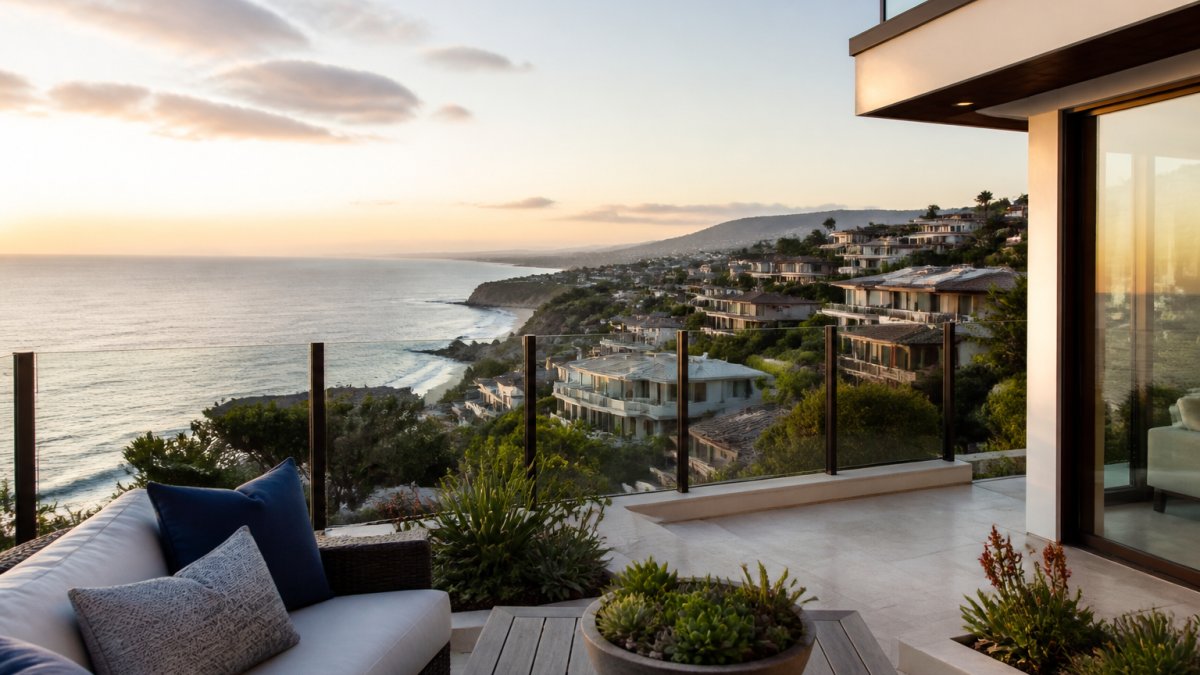
The orange county luxury home market is a distinct segment of coastal California real estate where properties trade in the seven- and eight-figure range, and where inventory, not demand, sets the pace. This guide breaks down what's moving in 2026, from Newport Beach waterfront estates to Laguna Beach hillside residences.
Below, we'll show how the buying process works, where staging decisions change outcomes, and which ownership costs catch out-of-state buyers off guard. These neighborhoods behave differently from one another, and treating them as a single market is the fastest way to misprice a property or overpay.
Coastal Orange County Luxury Real Estate Trends
Coastal Orange County luxury real estate trends in 2026 point to a market defined by tight inventory and patient, well-capitalized buyers. California Association of Realtors market data tracks the region's coastal submarkets, and the pattern is consistent: fewer listings, longer decision timelines, and pricing that rewards accuracy over optimism.
Inventory and Days on Market Along the Coast
Days on market along the coast varies sharply by price tier. Homes priced in line with recent comparable sales move within weeks, while properties priced on aspiration sit for months. Inventory stays constrained because many coastal homeowners have locked in favorable financing and see little reason to sell.
What's Driving Demand in Newport Beach and Laguna Beach
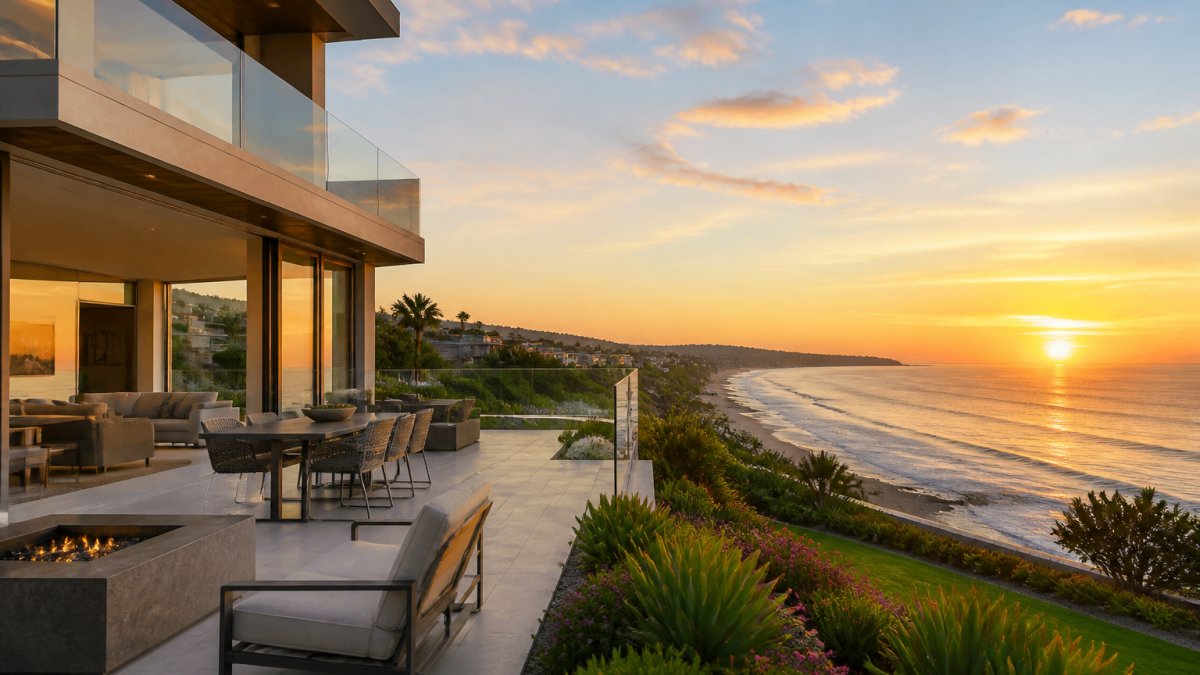
Demand in Newport Beach and Laguna Beach comes from local move-up buyers, relocating professionals, and second-home purchasers drawn to the coastal lifestyle. Demand here is less about volume than specificity: a buyer seeking a Newport Beach bayfront estate is not the same buyer seeking a Laguna Beach hillside residence with gallery walls.
Luxury Home Buying Process in Orange County: A Step-by-Step Framework
The luxury home buying process in Orange County follows a predictable sequence, but the details at each stage carry more weight than in the broader market. Here's a framework to consider.
Total Time: 60-120 days from first tour to closing, depending on financing type.
- Define your criteria and price tier before touring. Lifestyle priorities, schools, and commute patterns should drive the shortlist, not the reverse.
- Tour with intent. Schedule viewings in clusters by neighborhood so you can compare homes while the details are fresh.
- Review disclosures and title early. Coastal properties can carry easements, HOA layers, and coastal commission considerations that affect use.
- Secure financing or verify funds. Cash offers carry weight, but well-structured jumbo financing competes effectively when terms are clean.
- Negotiate with data. Comparable sales, days on market, and inspection findings give you use that emotion does not.
- Complete due diligence. Inspections, appraisals, and insurance verification should run in parallel, not sequentially.
Financing and Due Diligence for High-Value Properties
Financing for high-value properties differs from standard mortgages. Jumbo lenders scrutinize income documentation, reserves, and appraisal quality more closely, and coastal properties sometimes appraise below contract price when comparable sales are thin. Confirm insurance availability early, since coastal coverage can require separate policies.
Luxury Property Staging Tips That Move Million-Dollar Listings
Luxury property staging tips that move million-dollar listings share one trait: they make the home's best feature impossible to miss. Staged homes photograph and show better, and buyers often shortlist from listing photos before ever scheduling a tour.
- Lead with the view. Arrange furniture so sightlines to the ocean, canyon, or harbor are unobstructed from the entry.
- Reduce, then refine. Luxury staging is subtraction. Remove personal collections and let architecture carry the room.
- Invest in lighting. Warm, layered lighting photographs better than overhead fixtures alone.
Neighborhood Comparisons: Lifestyle Trade-Offs Across Orange County
Neighborhood comparisons across Orange County come down to lifestyle trade-offs rather than rankings. Each coastal community offers a different mix of privacy, walkability, and access, differences that show up in price tier, lot size, and how a typical week feels.
How to Read the Table
Price tiers below describe the typical luxury segment in each community, not the ceiling. A community with a lower entry tier can still contain eight-figure estates; the tier reflects where most luxury transactions cluster. Lot size, view orientation, and flat versus graded terrain drive most of the spread within a single ZIP code.
| Community | Typical Luxury Price Tier | Character | Best For | Trade-Off |
|---|---|---|---|---|
| Newport Beach | Broadest range, from upper-seven figures on the peninsula to eight figures on the harbor and in Dover Shores | Harbor, peninsula, and bayfront living; active social and dining scene | Buyers who want waterfront access, walkability to restaurants, and a deep resale pool | Higher density in some pockets; bayfront premiums can be steep |
| Laguna Beach | Upper-seven to eight figures, with hillside view premiums | Hillside residences, art-colony heritage, coves, and gallery culture | Buyers prioritizing privacy, character, and a slower daily rhythm | Steeper terrain, limited flat lots, and parking constraints in the village |
| Corona del Mar | Upper-seven to eight figures on compact lots | Walkable village, ocean proximity, tight street grid | Buyers who value walkability and beach access over acreage | Less square footage per lot; fewer true estate parcels |
| Dana Point | Upper-seven to eight figures, with newer construction commanding premiums | Harbor village, coastal bluffs, newer development | Buyers wanting a quieter coastal base with more new-construction options | Smaller inventory of legacy estates; fewer ultra-high-end comps |
| Newport Coast | Eight figures and up, gated communities | Gated, master-planned, panoramic ocean and canyon views | Buyers who want privacy, security, and consistent architectural standards | HOA layers and design-review rules; less street-level spontaneity |
| Coto de Caza | Seven to low-eight figures, gated inland | Gated equestrian and golf community, larger lots | Buyers who want acreage, privacy, and a family-oriented inland base | Inland heat and a longer drive to the coast |
What the Table Doesn't Tell You
Three trade-offs matter more than any single row:
- Coastal vs. inland. Coastal communities trade lot size and privacy for proximity to the water and walkability. Inland gated communities trade ocean access for acreage, newer construction, and lower per-square-foot pricing at the same quality level.
- Flat vs. graded terrain. Laguna Beach and parts of Newport Coast sit on graded terrain, which affects usable yard space, drainage, and the cost of any future remodel. Flat lots in Corona del Mar and parts of Newport Beach command a premium for exactly this reason.
- Gated vs. open. Gated communities add HOA layers and design-review timelines but deliver consistent streetscapes and security. Open coastal neighborhoods offer more spontaneity but more variability block to block.
A Practical Way to Shortlist
Most buyers we work with narrow to two or three communities before touring. Rank your priorities, walkability, lot size, view, new construction, privacy, commute, and score each community against them. The community that wins on your top two priorities is usually the right starting point. What most buyers underestimate is how much daily life changes between communities: a residence that feels perfect on a Saturday tour can feel isolating on a Tuesday commute.
Ownership Costs and Due Diligence for Orange County Luxury Properties
Ownership costs for Orange County luxury properties extend well beyond the purchase price, and out-of-state buyers are frequently surprised by the line items. Here is how each one actually works.
Property Taxes
California property taxes are governed by Proposition 13, which caps the assessed value increase at 2% per year for a property that does not change ownership. The base rate is generally 1% of assessed value, plus voter-approved local assessments that vary by city and district. For a luxury purchase, your first-year tax bill is set near the purchase price and grows slowly from there, a meaningful difference from states that reassess to market value.
Insurance
Coastal coverage most often surprises out-of-state buyers. Standard homeowners policies may exclude or limit wind, flood, and sometimes wildfire exposure, and high-value homes frequently require a separate excess or umbrella policy. Insurers weigh roof age, construction type, and proximity to the coast when pricing. A property can be affordable to buy but difficult or expensive to insure, which is why we recommend confirming insurability before removing contingencies, not after.
HOA Dues and Layers
Many luxury properties sit within one or more HOAs, a master association, a sub-association, and sometimes a separate architectural review body. Each layer carries its own dues, rules, and reserve requirements. Dues in gated and master-planned communities can run from several hundred to well over a thousand dollars per month, and special assessments for major repairs or litigation are possible.
Maintenance and Service
Luxury homes carry luxury maintenance. Pool and spa service, landscaping, window cleaning, HVAC servicing, and exterior upkeep on large or architecturally complex homes add up quickly. A reasonable planning assumption is that annual maintenance runs a meaningful fraction of the home's value, more with extensive hardscape, mature landscaping, or specialized finishes. Ask the seller for a recent maintenance history and budget accordingly.
Coastal Zone and Rental Restrictions
Properties within the coastal zone can face additional review for remodeling, additions, and short-term rental use. Local short-term rental rules vary by city and can change, so buyers considering an investment or vacation home should verify current rules with the city before relying on rental income in their underwriting. Easements, view corridors, and bluff-top setback requirements are also common on coastal parcels and should be confirmed during title review.
A Due Diligence Checklist
- Title review, easements, encroachments, and recorded restrictions.
- Full inspection, including roof, drainage, and any specialized systems.
- HOA document review, governing documents, budget, reserves, and pending litigation.
Market Outlook: Historical Trends and What's Ahead for the Orange County Luxury Home Market
Historical trends in the orange county luxury home market show a segment that has weathered downturns better than the broader market, largely because buyers at this price tier are less sensitive to rate movement.
Sellers who price on evidence and present well should continue to see strong interest. Buyers who move decisively on the right property, with financing verified in advance, will keep their advantage.
Conclusion: Making Informed Decisions in the Orange County Luxury Market
The orange county luxury home market rewards preparation over speed. Whether you're buying a coastal residence or selling a distinctive property, the difference between a smooth transaction and a stalled one comes down to pricing accuracy, presentation, and local knowledge. Rhonda Scott brings 24+ years of Southern California experience, $578M+ in closed transactions, and a personalized, detail-driven approach to every client relationship.
Frequently Asked Questions
Are luxury home prices dropping in Orange County?
Price movements vary by city and price tier. Coastal communities like Newport Beach and Laguna Beach have shown resilience due to limited inventory, while inland luxury areas may see more negotiation room. Tracking median listing prices and days on market by specific neighborhood gives a clearer picture than countywide averages. For a property-specific valuation, consult a local expert.
What are the most exclusive neighborhoods for luxury real estate in Orange County?
The most exclusive areas include Newport Coast, Laguna Beach's cliffside communities, Corona del Mar, and gated enclaves in Dana Point. These neighborhoods offer ocean views, privacy, and proximity to high-end amenities. Inventory is typically tight, and homes often sell through off-market networks before public listing.
How does current inventory impact the Orange County luxury home market?
Low inventory in coastal Orange County has kept competition steady among qualified buyers. When well-priced homes in desirable neighborhoods come to market, they often attract multiple offers. Buyers should be prepared to move quickly and have financing in order. Sellers with unique properties benefit from strategic pricing and presentation to stand out.
Is now a good time to invest in the Orange County luxury market?
Orange County's coastal luxury market has historically shown long-term value growth, supported by limited buildable land and consistent demand. Whether now is right for you depends on your goals, timeline, and financing. Working with a local expert who understands city-level trends and off-market opportunities can help you evaluate specific properties.